Bitmap File A bitmap graphic file (.png, .jpg, or .gif). Nine-Patch File A PNG file with stretchable regions to allow image resizing based on content (.9.png). Layer List A Drawable that manages an array of other Drawables. These are drawn in array order, so the element with the largest index is be drawn on top. State List An XML file that references different bitmap graphics for different states .

Level List An XML file that defines a drawable that manages a number of alternate Drawables, each assigned a maximum numerical value. Transition Drawable An XML file that defines a drawable that can cross-fade between two drawable resources. Inset Drawable An XML file that defines a drawable that insets another drawable by a specified distance. This is useful when a View needs a background drawble that is smaller than the View's actual bounds. Clip Drawable An XML file that defines a drawable that clips another Drawable based on this Drawable's current level value.

Scale Drawable An XML file that defines a drawable that changes the size of another Drawable based on its current level value. Creates a ScaleDrawable Shape Drawable An XML file that defines a geometric shape, including colors and gradients. Creates a ShapeDrawable.Also see the Animation Resource document for how to create an AnimationDrawable. When we want to include graphic elements into our Andoid app we have couple of options. We can of course import bitmap images in formats like webp or png. We can use Android vector drawables and use them in any size we want.

Another way to include simple graphic has always been using the ShapeDrawable. Shapes are the simplest way to add some simple backgrounds and maybe also some simple icons. Because layer-list creates drawable resources, like shape selector, it is defined in the drawable folder in res and is also an xml file. When you use it, you use the @drawable/xxx reference in the layout file and the R.drawable.xxx x reference in the code with the shape selector. In most applications, graphics needn't be images, so developers should avoid using too many PNG files, as it makes APKs heavier and views slower to load.
Simple backgrounds or shadows can be done programmatically with different drawable types provided by Android. These dynamic drawables can be written with xml and then placed in the /res/drawable folder as they are not density-dependent. Then, they can be used exactly the same way as images are referenced with @drawable/file_name in XML and R.drawable.file_name in code. There are different way to use shapes, from the simple solid shape to some more complex combined ones. Using solid color shapes and gradients we can customize the appearance of buttons, layouts and other views without requiring the use of any images.

Note that custom shapes can be created at runtime using other shape drawable types using PathShape and ArcShape. The Path class represents a compound geometric path that can be drawn to Canvas. A path can include multiple straight lines, quadratic or cubic curves, or simple geometric shapes like arcs, circles, and rectangles.

It can be drawn via Canvas#drawPath() in custom views, in drawables, or to bitmaps . A path can also be drawn either filled or stroked, depending on the style of the paint used for drawing. The shape is used to define custom shapes in android drawable resources. It is used in both selector and layer-list elements.

The Shape Drawable is an XML file that defines a geometric shape, including colors and gradients. This is used to create a complex shape that can then be attached as the background of a layout or a view on screen. For example, you can use a shape drawable to change the shape, border, and gradient of a button background. We can specify a few shape's properties to modify it's appearance. These properties include the base shape, fill color , stroke size and color and for the rectangular shapes even some rounded corners. With these properties we can create drawables that can be used as button backgrounds, separators, panels or whatever else you can imagine.

For example, you can use a shape drawable to change the shape, border, and gradient of a Button background. In Android 5.0 and above, you can define vector drawables, which are images that are defined by a path. A vector Drawable scales without losing definition.

Most vector drawables use SVG files, which are plain text files or compressed binary files that include two-dimensional coordinates for how the image is drawn on the screen. A drawable resource is a general concept for a graphic that can be drawn to the screen. Drawables are used to define shapes, colors, borders, gradients, etc. which can then be applied to views within an Activity.

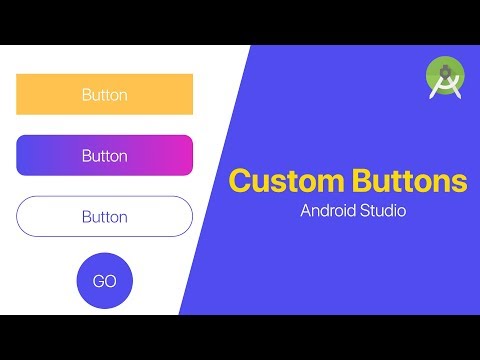
Custom buttons in Android 13 techniques to style your buttons Using colors background text border Using custom shapes like circle rounded corners and. The size, padding, solid, corners, strong and gradient sub-tags can be used under the shape and tag, where size is used to specify the size of the drawable. If the drawable is used as background, then the width and height can be set to 1. It will be compared with the UI width and height in the layout, taking the most of them.

Large value, if it is the value of the src attribute in ImageView, the width shown will be the same as the width specified in size. If you are interested, you can try it on your own. Now that we have this drawable resource file, we can customize our button by adding tags like shape, color, stroke, or any other attribute which we want.
Vector images are represented in Android as VectorDrawable objects. For details about the pathData syntax, see the SVG Path reference. To learn how to animate the properties of vector drawables, see Animate Drawable Graphics. A level list drawable defines alternate drawables, each assigned a maximum numerical value.

To select which drawable to use, call the setLevel() method, passing in an integer that is matched against the maximum level integer defined in XML. The resource with the lowest maximum level greater than or equal to the integer passed into setLevel() is selected. Now we have everything we need to create the drawable resource for the button with rounded corners. Open up the drawable resource you have previously creating in Android Studio.

Edit the colors.xml file in Android Studio and add a new color to be used for the rounded button's background color. See the code snippet below showing how colors are defined inside the colors.xml file. It is not complicated to put items together this way. You can use other xml drawables, vector drawables or pngs.
If you use pngs, then you can wrap them into bitmap tags, to apply more properties . Below example defines level list xml with three dawable items with different levels and level ranges. On clicking a button, level is incremented by calling setLevel on Drawable that will make it show corresponding drawable from the level list. Every time the button is clicked, image will be changed to reflect level value. For example you can use a shape drawable to change the shape border To create a vector image you need to define pathData syntax which is located here.

Notice that the background property has been set to the states list in order to. The Outline Stroke feature allows you to convert strokes into vector objects. As of API level 21 you can use vector drawables in your Android application. These are similar to svg files but with a limited scope. Using vector drawables automatically scale to the density of the device. The following listing demonstrates its usage in the vectordrawable.xml file.

There are two custom shapes in the below example. The green shape is drawn at the top because it is defined at last in the layer-list definition. For this button we will be applying a solid background color to it. Shapes are a good way to create a dynamic UI and to be sure that it looks good on every screen.

By using different types and nesting shapes, it is easy to build more complex graphics. Unfortunately, limits are quickly reached and with more advanced designs, we need to find another way to match different screen sizes. When shapes are not powerful enough, the next solution is to use a 9-patch drawables to have stretchable areas within the images.

To do so, we specify the dashWidth and dashGap attributes on the stroke element. Create res/drawable/shape_dotted_green_line.xml file. A StateListDrawable is a drawable object defined in XML that uses a several different images to represent the same graphic, depending on the state of the object. For example, a Button widget can exist in one of several different states and, using a state list drawable, you can provide a different background image for each state. A StateListDrawable is a drawable object defined in XML that uses several different images to represent the same graphic, depending on the state of the object. For example, a Button can exist in one of several different states and, using a state list drawable, you can provide a different background image for each state.

To use an image resource, just add your file to the res/drawable/ directory of your project. From there, you can reference it from your code or your XML layout. Either way, it is referred using a resource ID, which is the file name without the file type extension (E.g., my_image.png is referenced as my_image).

Learn how to draw custom shapes and paths in Android by creating a neat curved profile card with gradient colors. The Shape Drawable is an XML file that defines a geometric shape including The most common use is a button that has to stretch based on the text displayed inside. You can also use the draw9patch tool to create special ninepatch images or This is useful when a View needs a background that is smaller than the.

If you select objects that are not in a frame Figma will create an auto layout frame Unlike smart selection there isn't a way to adjust the spacing on the canvas. Create custom shapes and edit them in vector edit mode; Combine multiple Image showing how much more complex a shape is when you use outline stroke. Android also support animated vector drawables via the AnimatedVectorDrawable class. It allows to combine vector drawables with animations. With vector drawables you can create different images and morph between them and can start and stop it via your code.
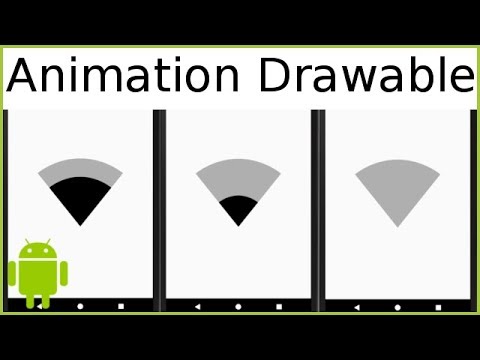
You cannot control the animation nor pause the animation at a particular frame. Shape, selector, and layer-list are usually used to create custom drawable resources in android development. Those three XML elements can save a lot of UI resources and time if being used properly. This article will show you how to use them correctly. The first step to create a path is to call the beginPath().
Internally, paths are stored as a list of sub-paths which together form a shape. Every time this method is called, the list is reset and we can start drawing new shapes. Using level list drawable, drawable attributes of a view can be set to deferent drawables at run time by calling setLevel on Drawable object and passing level value to it.

The level value points to a drawable in the level list drawable. An example use of a NinePatch is the backgrounds used by standard Android buttons — buttons must stretch to accommodate strings of various lengths. A NinePatch drawable is a standard PNG image that includes an extra 1-pixel-wide border. It must be saved with the extension .9.png, and saved into the res/drawable/ directory of your project. Android offers a custom 2D graphics library for drawing shapes and images. The android.graphics.drawable package is where you'll find the common classes used for drawing in two-dimensions.

Draable to get background through tv is a gradient drawable object rather than a shape drawable object. I don't know why this happens and I don't see anything in the source code!! Moreover, there is a useLevel attribute in the shape tag and there is no code to parse the useLevel attribute in the shape Drawable.

On the contrary, Gradient Drawable parses this attribute in detail when it comes to Gradient Drawable. You can add graphics to your app by referencing an image file from your project resources. Android allows us to create shapes using shape drawable. The basic shapes supported in shape drawables are Line, Oval, Rectangle and Ring.

This tutorial focuses on how to create circle shape. The drawable created using android shapes are scalable and highly maintainable compared to pre graphics bundled with APK. You can define several items in the selector definition xml file. Each item include a drawable object that will be used for a button state.

All the three XML elements should be defined in an XML file under the app/res/drawable folder. When you want to use PNG or JPEG images in your application, you have to provide multiple copies of the same image for different screen densities. That, of course, clutters your app with copies of the same image. ShapeDrawables are a series of commands that tell how to draw something on the screen.